


Bringing Angelo Marchetti Back to Light
... A name regaining its worth.
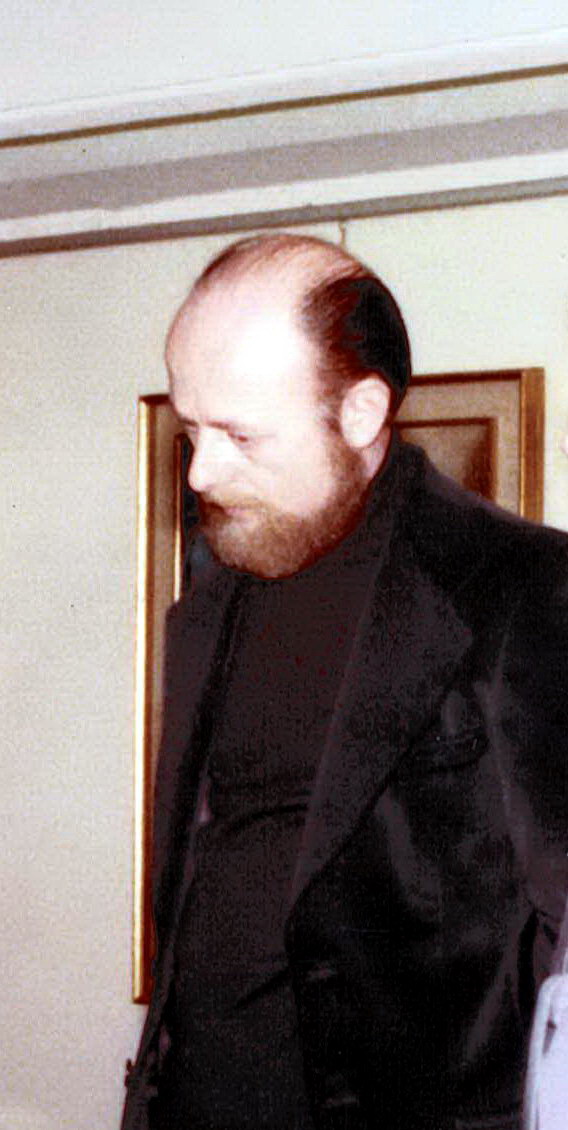
This web project was launched in June of this year (2026), dedicated to the figure and work of Angelo Marchetti (1930-2000). Its aim is twofold: to make accessible once again a body of work now scattered across private collections, and to bring back into focus an artist who remained for many years — by his own choice — at the margins of public artistic life. To this end, images and documents are being gathered and ordered, many of them coming directly from the collectors who followed the painter over time. At the same time, we hope to receive ever more material to help enrich this project of dissemination.
The meaning of this work becomes clearer by retracing how Marchetti the artist left the scene. Around the early 1980s he withdrew voluntarily, declining the invitations he received to take part in artistic initiatives across the region, from group shows to solo exhibitions, regardless of the many concessions offered.
He left the market and Milanese cultural life, partly by choice and partly out of necessity: a serious intestinal illness forced him into a long course of treatment and
several surgical operations that left him deeply weakened. The illness was eventually cured, but the operations left a lasting mark on body and mind,
even after it had been resolved.
His artist's mind was marked from an early age by an inner search; the same that runs through the period of the "Dark Works" and, let us not forget here, for a time drew close to his existential inquiry, pushing deep into esoteric studies and frequenting those Milanese circles where art conversed with esotericism. There, his detachment from the concreteness of life is not flight, but the consequence of a gaze turned elsewhere. Everyday matter becomes an opaque presence to pass through, while thought searches for the manner and the subject in which to say what lies beyond the visible. One need only look at the works of those years to sense it. Herein lies the deep coherence of the man-artist: to question, without respite, the relationship between man, being and the divine.
Withdrawal did not mean the end of his work. Marchetti went on painting, setting aside engraving and sculpture, while his paintings continued to circulate through a couple of trusted art dealers, who placed the works and secured him an income. It should be made clear that Angelo Marchetti never worked to commission, even though a small circle of collectors stayed close to him and urged him to create new works, without ever constraining his creative freedom.
His choice to step away from the "economic world of art" , which instead demanded a public presence, was in part brought on by the illness he had suffered; it is an approach that inevitably kept him away from the general market, the one that had been active in the years of his studio on Via Raiberti. Over time that detachment became distance, and distance, oblivion, yet this mattered little to the artist: from a young age he had a certain disinclination to take part in art exhibitions; it was only the awareness of economic necessity, art having become his sole means of subsistence, that led him to accept, though always with reluctance. As long as the artist was alive, relations with the few gallerists, by then become friends of the family were kept by his wife Liliana who, with discretion and pragmatism, handled dealings with the "commercial world" on behalf of Angelo's works, deliberately remaining in the background.
From here this evolving work takes its start: the recovery of works not yet catalogued and the reordering of scattered documentation, to restore legibility and recognisability to a name that deserves to return to its rightful place. Documentary research currently quite difficult, since in the years the artist was active the digitisation of information did not yet exist, and the analysis of the works are presently under way and being studied. Periodically we seek to publish images of works and news of the artist's activity; to date more than a thousand images are held, all of which we hope to be able to publish. It will be a long and detailed effort, one that admits no haste and on which every serious recognition of an author rests.
The work also concerns the collectors who today own Marchetti's works; having been contacted and shown the project, some have come forward and are taking part in reconstructing his artistic path. A reasoned publication is being compiled, intended to reconstruct and document the artist's oeuvre. In parallel, research is under way into the artist's documented presence in the institutions that catalogue and preserve the memory of art, an essential element for rebuilding, over time, the recognition of an author. Where the name becomes legible again, the work becomes recognisable again, and with it the path that sustains it. Those who take part now in the reconstruction do not observe the process from the outside: they are part of it.
The project does not aim to place works in galleries for sale or to entrust them to art dealers, this is not the interest pursued. Angelo Marchetti is not an artist to be put on the market as one among many; the intent is to reconstruct his story and his message, and to let these speak for themselves.
There remains the question that every work by Marchetti carries with it, and that this project seeks to make audible once more: what he meant to say by painting. To recompose his work means this too: to restore the voice of an artist who had entrusted to painting his own inquiry into man and the divine, despite the troubled periods, the illness, and his withdrawal into a secluded life.
Anyone wishing to contribute, with a work, a document, or a testimony, may write to the contact details provided.
A note in the margin. Some web portals, currently active, that aggregate auction results have attributed to Angelo Marchetti (1930-2000) works that are not his. These are errors for which a request for correction has been submitted to the sources. Distinguishing what is his from what is not remains, after all, the heart of this work.