<
"Untitled"
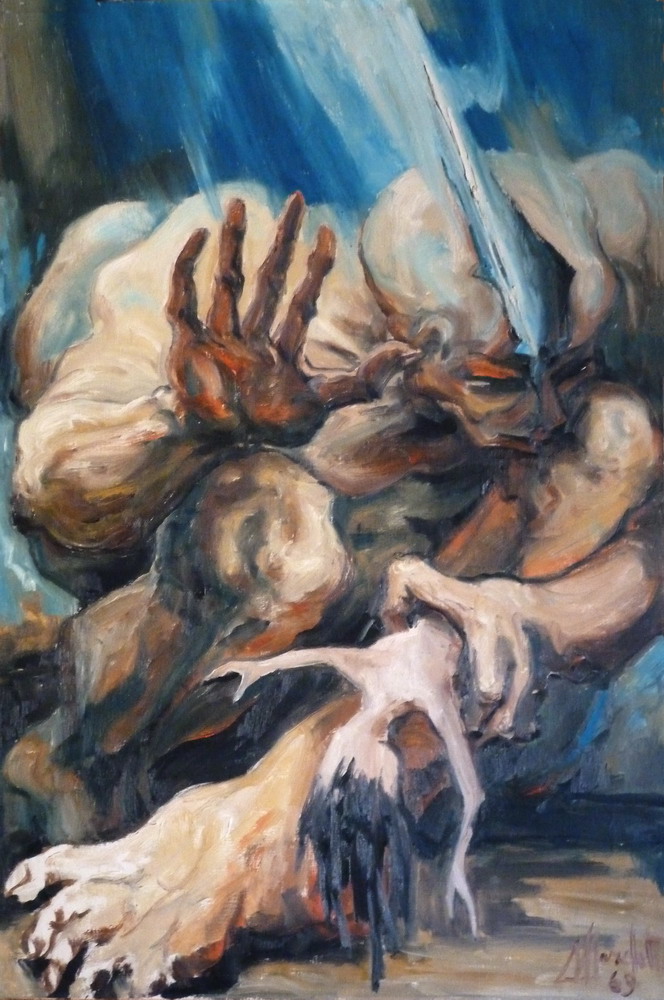
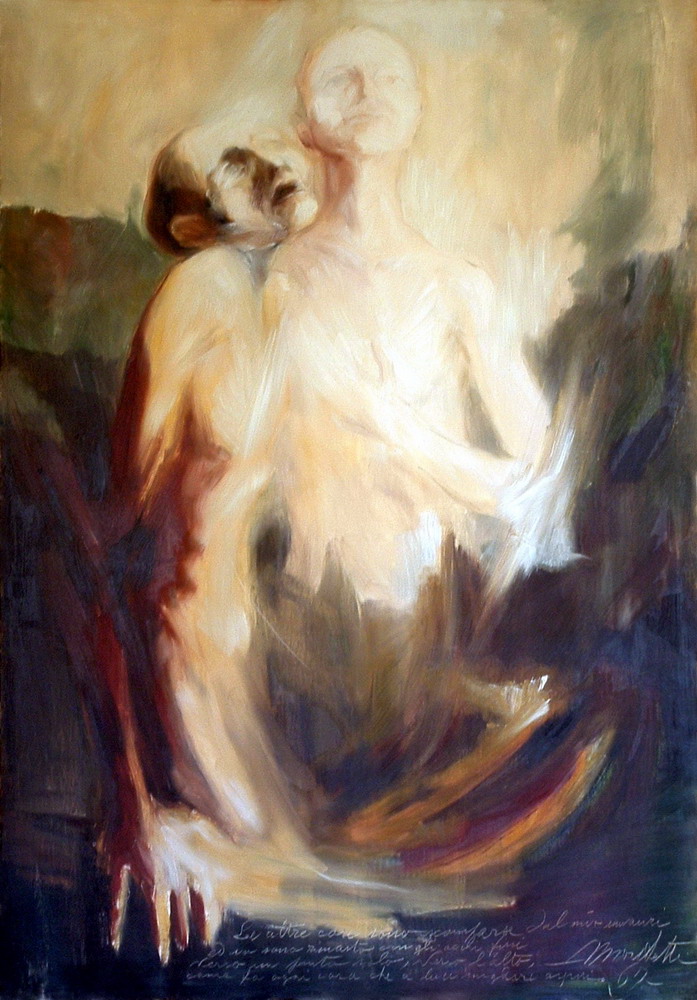
Oil on canvas, 1969, 100x70 cm (Cat.1255) Private Collection FT
Select your language
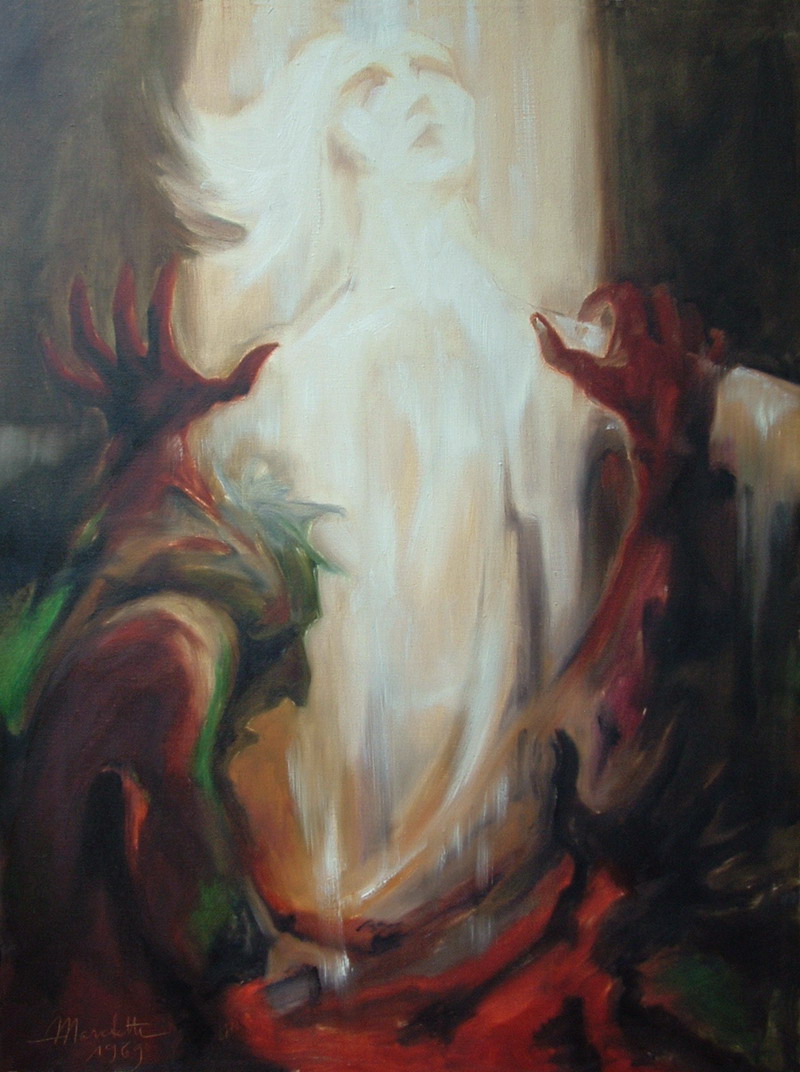
"Untitled"
Oil on canvas, 1969, 100x70 cm (Cat.1255) Private Collection FT
"Untitled"
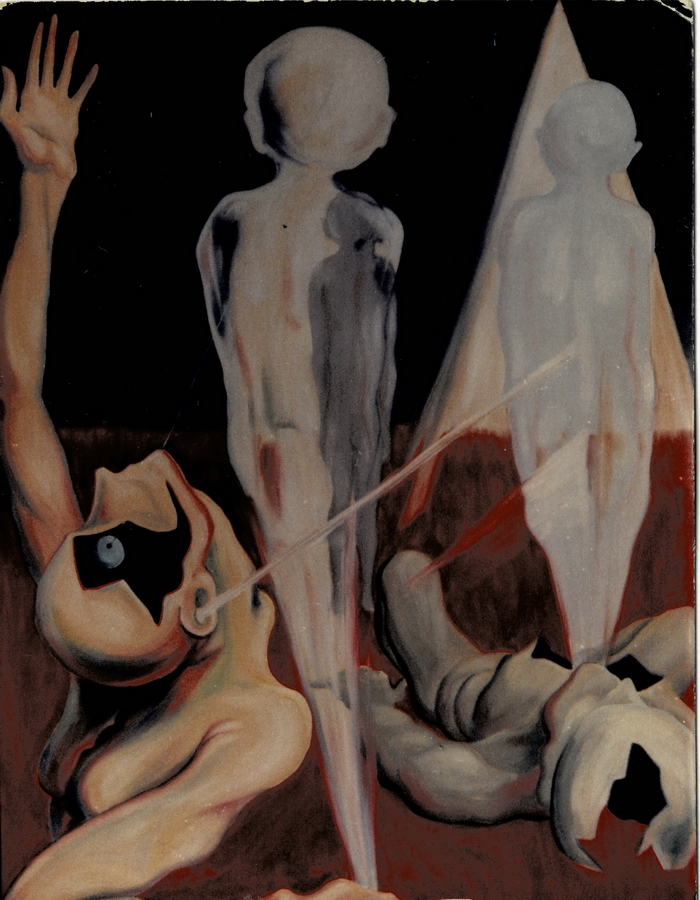
Oil on canvas (?), dimensions not recorded, n.d.
Archive photograph nK09
"Untitled"
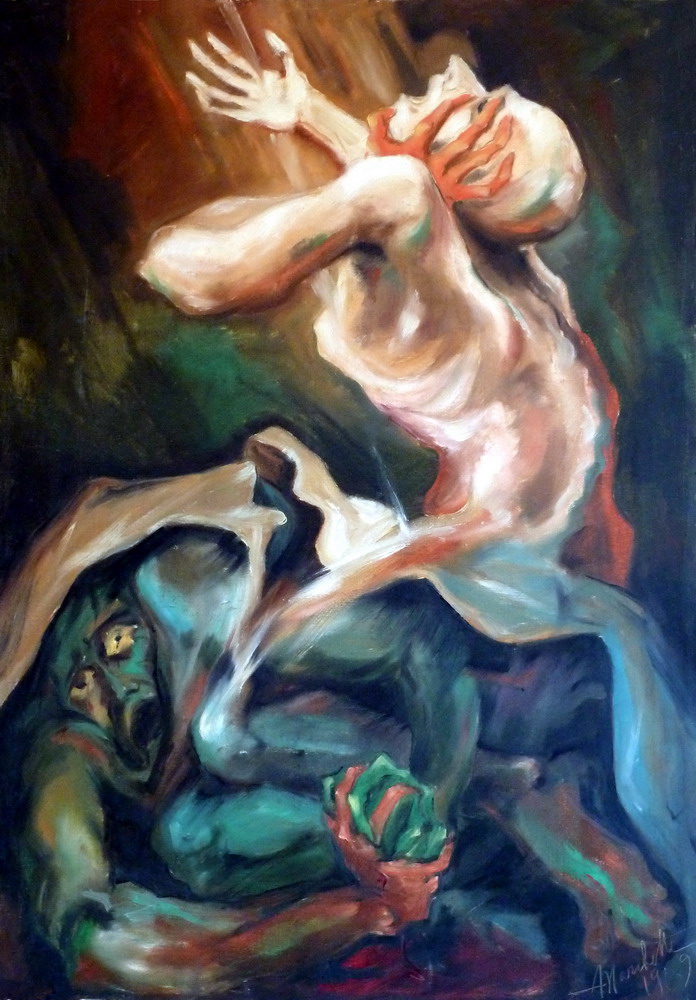
Oil on canvas, 1969, 100x70 cm (Cat.1327)
"Untitled"
Oil on canvas, 1969, 90x60 cm (Cat.1357) Private Collection BG
"Untitled"
Oil on canvas, 1971, cm.120x80 (Cat. 1331)
"Untitled"
Oil on canvas, 90x60 cm (Cat.1359)
"Untitled"
Oil on canvas, 1970, 100x70 cm (Cat. 1360) Private Collection BG
"Untitled"
Oil on canvas, 1969, 100x80 cm (Cat.1329)
"Untitled"
Oil on canvas, 1969, 100x70 cm (Cat.1326)
Text by the Association (ADAAM) - not independent criticism.
Visual and Critical Analysis
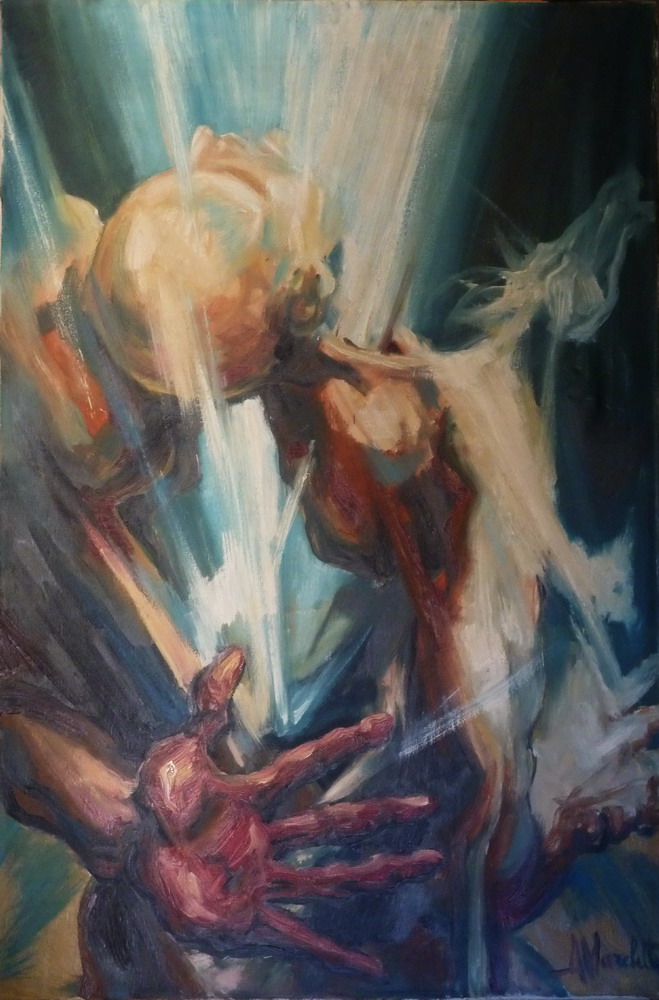
At the centre of the canvas a figure of light ascends. It is not a body or rather, it is a body that has ceased to be flesh in order to become radiance. The back barely turned, the head thrown back, the face serene in its liberation, the hair loosened upward like a white flame: all this restores the inevitable dynamism of the act. Here the dark, in physics, is not a thing but a lack: the absence of light. The painting knows this and overturns it all the same, because to art it is permitted. Here the roles are reversed: the figure is not painted so much as drawn out of the dark, obtained by subtraction from the obscurity that surrounds it. Darkness becomes the matter, and light that which detaches itself from it; and the two truths, the physical and the pictorial, coexist without cancelling one another.
Lower down, the whiteness of the luminous figure unravels into vertical runs. Colours still warm yet not weightless, the oranges and the brownish shadows, lend continuity to the moment in which the luminous matter comes away, in the act of flowing upward, ready to dissolve into the intensity of the light that dominates everything like an aspirating column that seeks its own dissolution.
This is the painting's first metaphysical intuition: the "soul" has no outline, no weight, not even a full consistency. It exists as tension, as direction: a bearing, not a form.
But this ascent is not a peaceful one. It is contested.
On either side of the luminous column that enfolds the figure of light, the darkness until it reveals itself as a saturating chromatic magma, occupies the lower part of the canvas: a seething of deep reds, ochre, earthy greens and blacks, the "sensed mass of the physical body of flesh" from which the figure of light emerges, lying as though anchored to the magmatic ground, almost a single element with the earth. And here a dark bodily presence can be discerned; the head stands out, its expression somewhere between the resigned, though it does not accept the inevitable and, thus, gazing downward, the look of one pained by the event: perhaps because it has not yet become aware of the soul?
The left-hand figure below, then, is a brownish-red form that branches out in the undoing of the body's presumed carnality; legible, and for that reason all the more dramatic, its hands outstretched, the left as if defending itself, shielding itself from the dynamism and luminosity of the event; the right, on the contrary, likewise reddish and made of matter, its fingers curled, reaching toward the radiance that escapes, in an attempt to grasp it and to halt the inevitable event of the soul setting itself free.
It is the gesture that holds the whole painting together: matter attempting to seize the spirit, to hold it back, to draw it down again.
Here lies the philosophical core of the work. Marchetti stages an age-old dualism, spirit and matter, soul and body yet strips it of every doctrinal consolation. In this work of 1969 there is neither the serenity of an assumption nor the certainty of salvation (these are the years of the artist's "Black Works", his Opere nere, a period of intense spiritual turmoil and esoteric research).
The work depicts the exact moment of the tearing-apart: the soul detaches, the flesh clings on. The right hand is not malevolent; it is desperate. It is the body that does not want to be left behind, that lays claim to what it is losing.
In Neoplatonic terms we would call it the soul rising back to its luminous origin; in more Gnostic terms, the imprisoned spirit attempting its escape from matter. But Marchetti does not illustrate a system: he paints the rupture, the instant in which the one is not yet free and the other has not yet surrendered. Herein lies the union of spirit and matter.
The formal construction translates this conflict precisely. The axis is vertical, and the direction of the spirit is always upward; along it the light rises clean, almost immaterial. The opposing forces, by contrast, are lateral, oblique, rooted below, bound to gravity and to dense colour. The chiaroscuro is no atmospheric device: it is the very structure of the thought. The light does not illuminate the scene, it is what is at stake in the scene.
And it is telling that the figure's face remains barely sketched, thrown back toward a source we cannot see: whoever ascends has already ceased to look at the world being left behind.
The reason for this painting, then. Marchetti paints neither death nor, properly speaking, a religious ecstasy. He paints the human condition as an unresolved tension between weight and impulse, the very tension that the criticism of his day had grasped, calling the man mild and the painter disconcerting in his audacity. Here the subject is the moment in which being discovers itself to be twofold: made of matter that holds back and of spirit that calls. The grasping hand is not an obstacle to be condemned, but the part of us that loves what is earthly and cannot let it go, even at the worst culmination of our existence.
This reading is no superstructure imposed on the painting after the fact: it is what the criticism of his time had already grasped, before canvases such as this. The spirit rising clean along the vertical axis, the radiance that slips from the grip of the red hand, the magma of matter that tries to call the figure of light back to itself, all that we have here described as a tearing between weight and impulse is the constant that, from the 1970s onward, his observers recognised at the heart of his painting.
"His commitment to making us feel man straining in the effort to free himself from the weight and the constraints of matter, seeking to recover the pure spirit from which he was born." Dino Villani - Parliamoci, 1971
English translation produced with the aid of artificial intelligence.
"Untitled"
Oil on canvas, 100x70 cm (Cat.1330)
"Untitled"
Oil on canvas (?), dimensions not recorded, undated
Archive photograph nK03
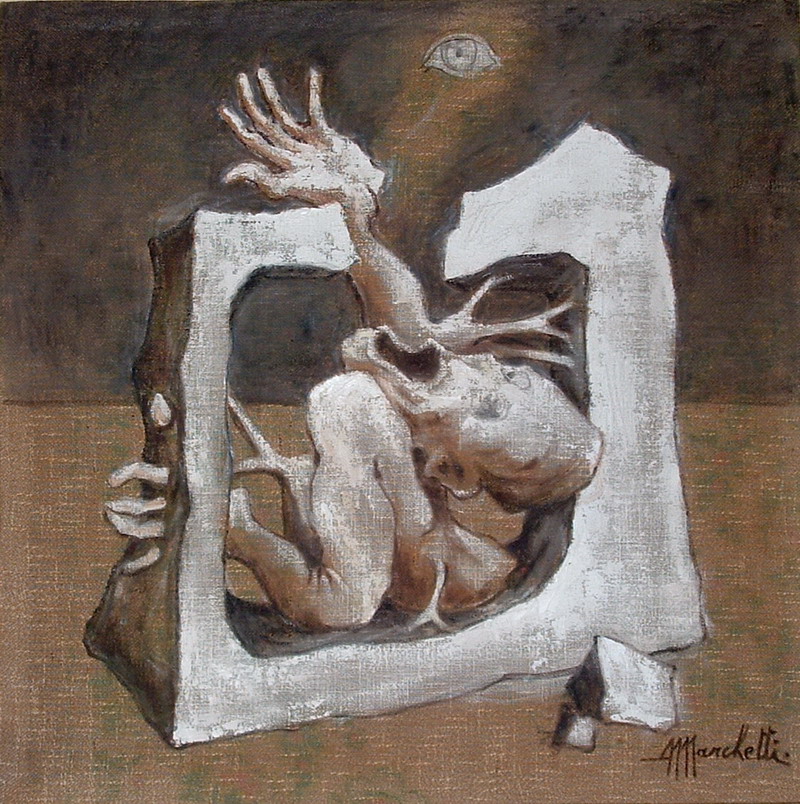
"Metamorphosis of the Threshold"
Oil on burlap, 90.5x90.5 cm (Cat. 1276)